
Huawei E173: the compact HSPA stick
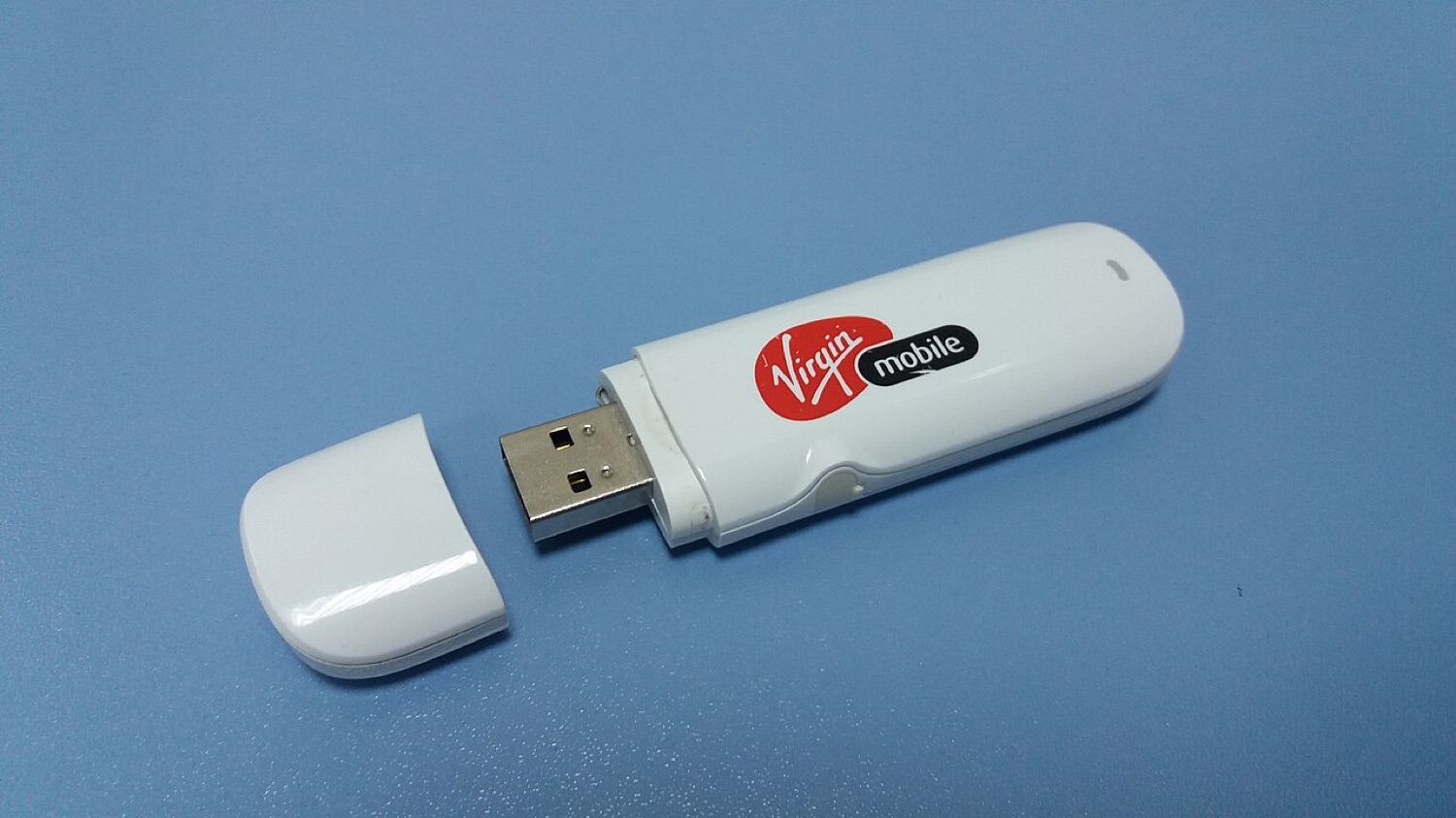
The Huawei E173 arrived around 2010 and quickly became one of the most common USB modems in the world. It was small, cheap to make and easy for operators to brand, so it appeared in shops under dozens of names and colours. The photo above shows one in Virgin Mobile livery; others were sold in plain white, black or operator red.
In the DC-Files index of 2011 the E173 was added together with its firmware update, and the page drew steady traffic for years. Here is what made the stick popular and what owners usually wanted to know.
The hardware
The E173 is an HSPA modem: downloads were rated at up to 7.2 Mbit/s and uploads at up to 5.76 Mbit/s, a big step up for uploads compared with older sticks. It has a hinged or capped USB plug, a SIM slot under the cover and a microSD slot, so the stick could double as a small flash drive.
A small LED shows the connection state. On most variants green means 2G, blue means 3G and cyan means HSPA, with blinking patterns for "searching" and "connected". The exact colours varied slightly by firmware, so the manual for the specific operator version is the best reference.
Mobile Partner
Most E173 units shipped with Huawei Mobile Partner or an operator re-skin of it, stored on the stick's virtual CD. Mobile Partner handled the connection, SMS, a data counter and the profile settings, including the APN. If you only need a connection and not the SMS features, a modern Linux system can drive the stick without any dashboard at all.
Many questions sent to the old site were really APN questions: the stick was fine, but the profile still pointed at the operator it was originally sold by. Our page on APN settings covers that in detail.
Variants and sub-models
The name E173 covers several hardware revisions with suffixes such as E173u-1, E173s or E173Eu. They differ in supported frequency bands and in the platform version of the firmware. Before trusting any instructions for an E173, check the exact model string on the label under the cover; using firmware or tools meant for another sub-model is the classic way to damage one.
Is it still useful?
The E173 has no 4G radio. In countries where 3G has been switched off it will not connect at mobile broadband speeds, if at all. Where 3G still runs, it remains a handy backup connection for a home router or a small computer, and it makes a fine test device for anyone curious about how USB modems work.
For travellers the honest advice is to choose a 4G or 5G device instead: lower latency matters for video calls, navigation and anything live, from a football stream to an in-play market that moves by the second.
Quick facts
| Item | Notes |
|---|---|
| Type | HSPA USB stick |
| Rated speed | Up to 7.2 Mbit/s down, up to 5.76 Mbit/s up |
| Extras | microSD slot, status LED |
| Software | Mobile Partner or an operator version |
| Watch out for | Sub-model suffixes (u-1, s, Eu) before any firmware work |
